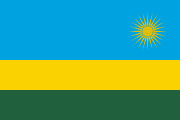
Rwanda
- Capital:
- Kigali
- Continent:
- Africa
- Region(s):
- Eastern Africa, Sub-Saharan Africa
- Abbreviation:
- RWA
14,889,693
As of Jan 1, 2026 - Source
14,889,693
As of Jan 1, 2026 - Source
Rwanda's population is projected to be32,523,673 by 2097.
Historical
Switch the toggle to see projected data.
Year↓ | Population | Change | Pop. Rank |
|---|---|---|---|
| 2026 | 14,889,693 | 2.2% | 77 |
| 2025 | 14,569,341 | 2.2% | 77 |
| 2020 | 13,065,837 | 2.27% | 77 |
| 2019 | 12,776,103 | 2.31% | 76 |
| 2018 | 12,487,996 | 2.34% | 76 |
| 2017 | 12,202,060 | 2.37% | 76 |
| 2015 | 11,640,022 | 2.44% | 76 |
| 2010 | 10,317,553 | 2.65% | 82 |
| 2005 | 9,054,528 | 1.97% | 87 |
| 2000 | 8,213,931 | 7.68% | 88 |
Year↑ | Population | Change | Pop. Rank |
|---|---|---|---|
| 2026 | 14,889,693 | 2.2% | 77 |
| 2032 | 16,771,822 | 1.97% | 78 |
| 2037 | 18,395,846 | 1.87% | 77 |
| 2042 | 20,153,985 | 1.84% | 76 |
| 2047 | 21,764,589 | 1.55% | 72 |
| 2052 | 23,300,260 | 1.37% | 72 |
| 2057 | 24,708,958 | 1.18% | 72 |
| 2062 | 26,141,278 | 1.13% | 70 |
| 2067 | 27,431,209 | 0.97% | 68 |
| 2072 | 28,589,815 | 0.83% | 67 |
524K
750K
1M
2.1M
Kigali has a metropolitan area population of 2,075,215, comprising 13.94%% of Rwanda's total population.
As of 2026, Rwanda has a total population of 14,889,693, ranking as the 77th most populous nation in the world.
Rwanda has a net population change of approximately 865 people per day, driven by 1,121 births, 237 deaths, and net emigration of 19 people.
Rwanda represents 0.19% of the total global population and 0.94% of Africa's population.
Rwanda has a population density of 603.6 people per km² (approximately 1563.2 per mi²), making it the 18th most densely populated country in the world.
Currently, 100% of the population resides in urban areas.
*Rates last updated: September 25, 2026
As of 2026, the largest ethnicity in Rwanda is Hutu (84%), followed by Tutsi (15%).
As of 2026, Protestant is the largest religion in Rwanda, comprising 57.7% of the population.