Nazi Germany's early war campaigns in Poland, Scandinavia, France, the Low Countries, Yugoslavia and Greece resulted in quick victories with relatively few military deaths. These victories grew Nazi territorial ambitions and fuelled a perception of an unstoppable German army, as well as putting millions of Jewish people, Romani and other persecuted minorities under Nazi administration.
At a Glance
82,400,000
Total Deaths
36,279,117
Total Injuries
2,961 days
Duration
July 1937 - Aug. 1945
Date(s)
Wars
Type of Event
World
Location
Facts
World War I was originally known as “The Great War” or simply “The World War”, a testament to its unprecentended scale and massive death toll. Yet, World War II eclipsed its predecessor in nearly every measurable metric. WWII encompassed more countries, involved more armies and navies, spread across larger portion of the world’s land and sea, and resulted in more material damage—and far more deaths—than any war before or since.
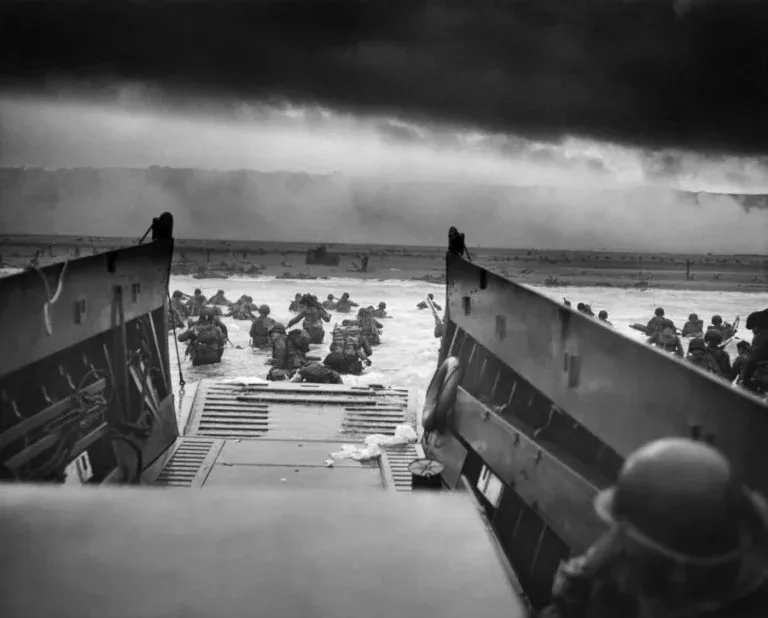
Into the Jaws of Death: Troops from the U.S. 1st Infantry Division landing in Normandy on D-Day (June 6, 1944), photographed by Robert F. Sargent
Overall Death Toll:
- 24,490,226 Military Deaths
- 57,990,774 Civilian Deaths
- WWII Deaths as % of Population: 3.72%
- Modern Equivalent to 3.72% Deaths (May 2026 pop.): 308,722,012
Allied Deaths by Category:
- 48,027,594 Total
- 16,671,357 Military
- 31,322,244 Civilian
- 83,268,166 Total Casualties (Killed, Wounded, Missing, POW)
Axis Deaths by Category:
- 8,874,118 Total
- 7,810,440 Military
- 1,122,008 Civilian
- 29,116,280 Total Casualties (Killed, Wounded, Missing, POW)
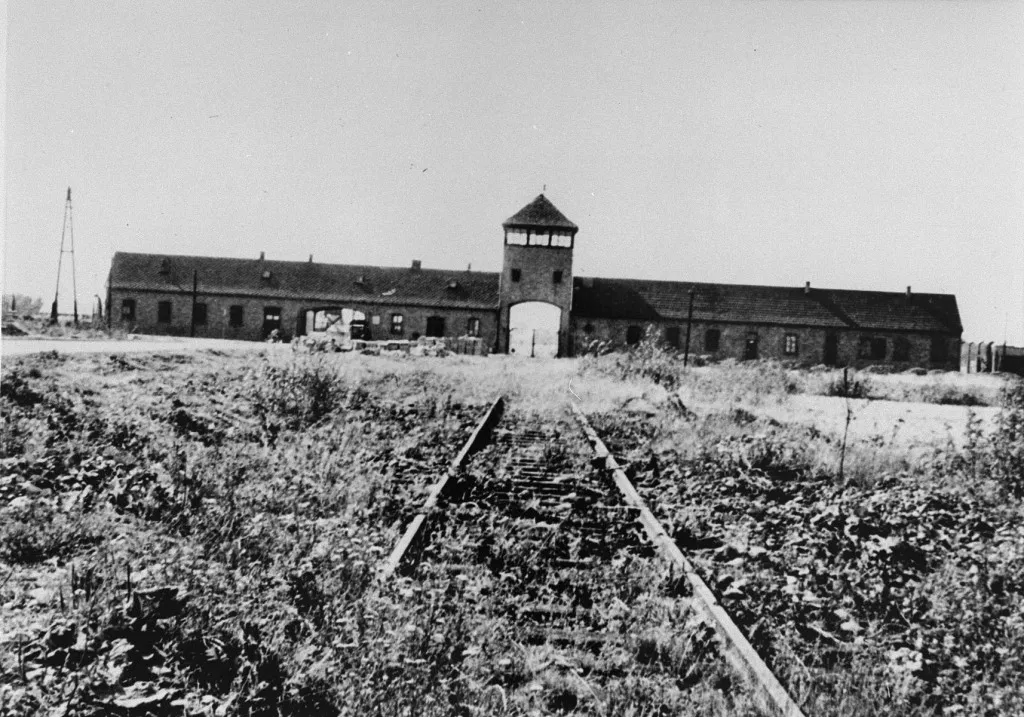
Auschwitz II-Birkenau was the Nazis' most prominent concentration and extermination camp. Approximately 1,000,000 Jews and thousands of other people were murdered there during the Holocaust.
Holocaust Deaths by Category:
- 5,750,000 Jews (Total)
- 2,700,000 Jews in Death Camps*
- 2,000,000 Jews in Einsatzgruppen Killings and Other Massacres
- 800,000 Jews in Ghettos and Concentration Camps*
- 250,000 Jews from Other Causes
- 196,000 Roma and Sinti
- 94,675 Disabled
- 15,000 Homosexuals
- 10,547,000 Slavs
- 228,000 Other Germans
- 5,000 Jehovah’s Witnesses
- 2,000 Blacks in Germany
- Death camps (“Vernichtungslager” or “Todeslager” in German) and concentration camps (“Konzentrationslager”) were two different things. Concentration/work camps, such as Oranienburg and Dachau, were designed to house large numbers of prisoners who essentially served as slaves. The main causes of death in concentration camps were disease, exhaustion, or starvation.
By comparison, death camps—Auschwitz-Birkenau, Chełmno (Kulmhof), Sobibor, Belzec, Treblinka, and (some sources) Majdanek—were smaller, exclusively located in German-occupied Poland, and built to house only a fraction of the arriving prisoners, as most were killed immediately upon arrival. Most prisoners in death camps were killed in gas chambers.
Deaths by Theater
- 13,523,250 Eastern Front
- 2,929,651 China
- 804,526 Pacific
- 776,175 Western Front
- 118,055 North Africa
- 307,520 Mediterranean
- 250,669 South East Asia
- 172,058 Balkans and Greece
- 154,217 Other
Figures have been extrapolated from per-year data.
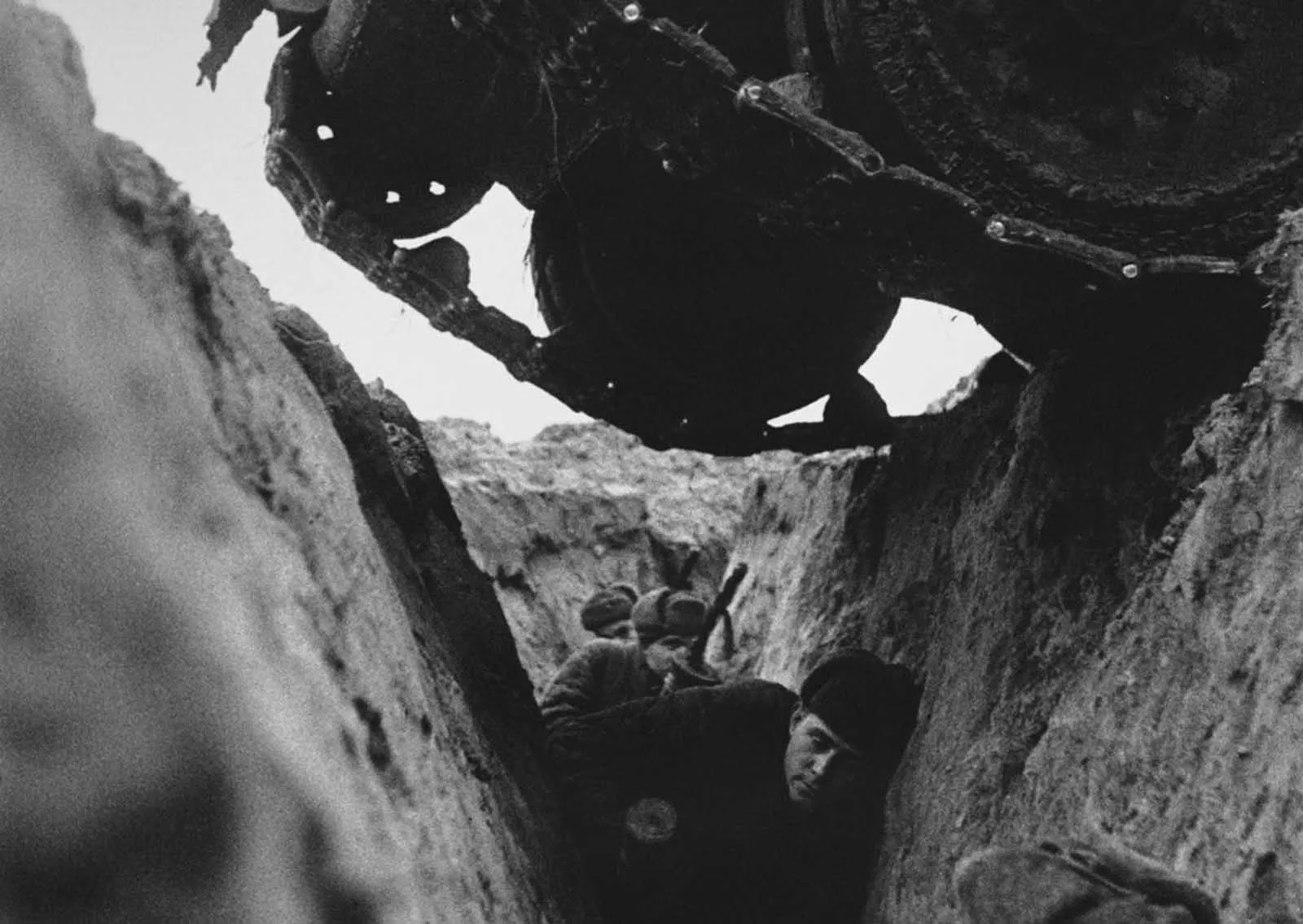
Soldiers crouch as a tank passes over them at the Battle of Kursk, 1943.
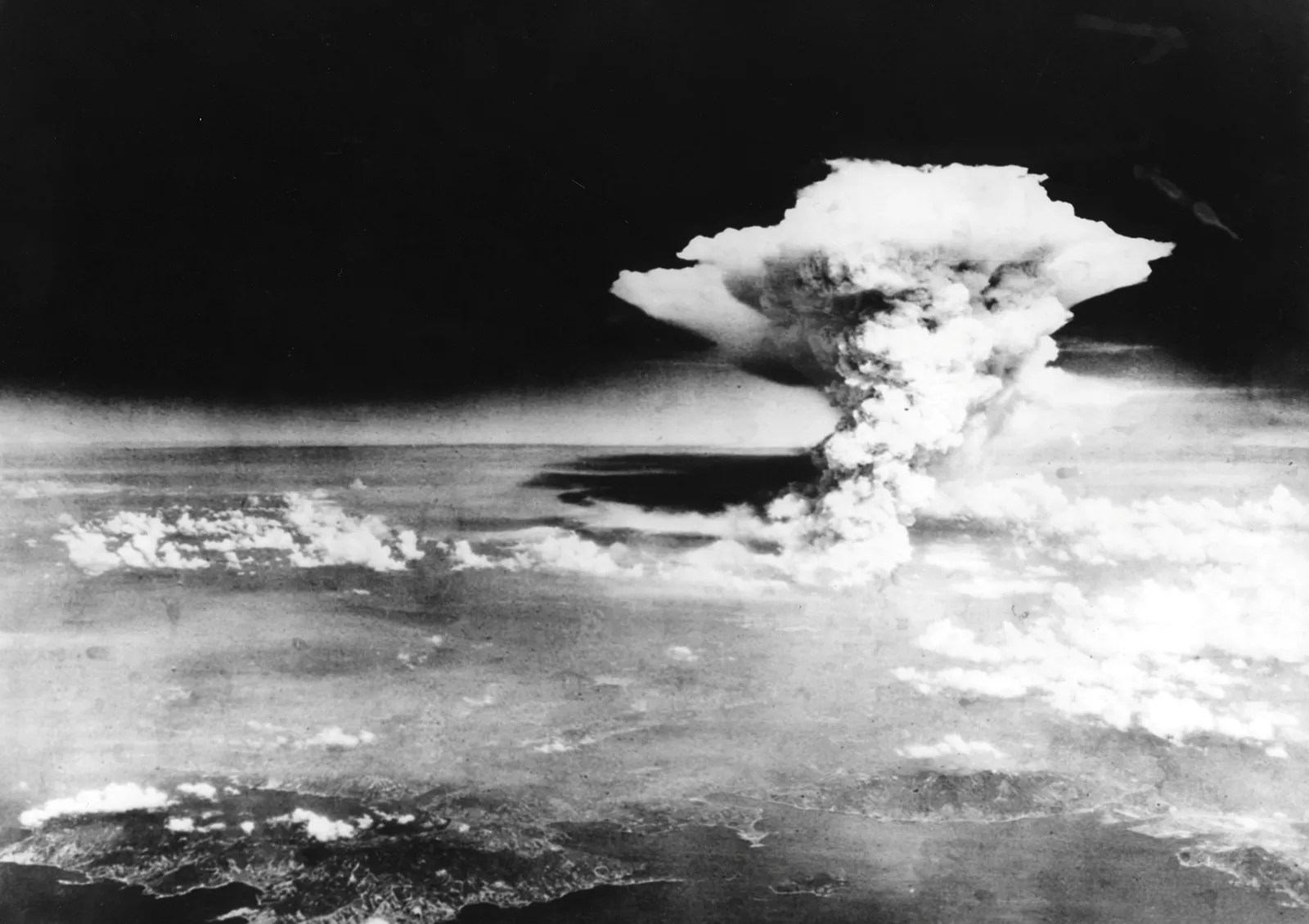
Mushroom cloud created by the detonation of the nuclear bomb 'Little Boy' over Hiroshima, Japan.
Timeline
Total Deaths
Note: Data shown in line graph include military and merchant deaths only and exclude civilians deaths. Some casualty figures span across years, so have been spread as evenly as possible. Data include deaths from disease and starvation (to military personnel), as well as DOW (died of wounds) deaths. Yearly totals have been calculated by compiling data from multiple sources. Combined yearly totals fall short of current estimates of total military deaths, which is to be expected due to incomplete reporting (particularly precise day-of-death dates) from some sources.
Many people in Europe and the Americas view Hitler’s invasion of Poland on September 01, 1939 as the start of World War II. However, most Asians point to the second Sino-Japanese War, which began on July 7, 1937 and merged with the later combat in Europe, as the true start date. Finally, a small subset of historians point out that the geopolitical conditions that led to World War II were a direct reuslt of World War I, so it could be argued that the second World War technically began “simmering” the day the first World War ended.
233.9K deaths
Early Axis Victories in Europe
1.1M deaths
Operation Barbarossa
(Deaths are minimum estimate.) Operation Barbarossa was the full scale Axis invasion of the Soviet Union across the entire 1,800 mile land border between territory controlled by the two countries. Involving nearly 11 million people, it was the largest military offensive in recorded history and would expand the scale of the war to a previously unseen scale.
117.4K deaths
Japanese Expansion in the Pacific
(Deaths are minimum estimate and exclude the China campaign.) The growing stalemate in China prompted Japan to begin its expansion in the Pacific, aiming to expand its 'sphere of influence' across South East Asia, Indonesia and Oceania. This string of offensives culminated in the declaration of war on the United Kingdom, United States and their allies, and was only slowed by major allied victories at Guadalcanal and Midway.
3M deaths
Battle of Stalingrad
(Deaths are minimum estimate.) The Battle of Stalingrad is widely attributed by historians as the most lethal battle in human history. Across 1942-1943, the USSR and Germany ground each other to dust over the ruins of the city on the Volga, ultimately resulting in the destruction of the German 6th Army and turning the tide of the war on the Eastern Front.
247.5K deaths
West European Landings
(Deaths are minimum estimate.) The Allied landings in Italy and Normandy re-opened the Western Front of the Second World War, aiming to drive German forces from countries occupied in 1940. The opening of a second front was crucial in splitting German forces and would be instrumental in shaping the political and diplomatic landscape of post-war Europe.
181.1K deaths
Fall of Berlin
The Fall of Berlin was the final battle in Europe during the Second World War. Soviet forces encircled the city and, in evocative scenes, raised the flag of the USSR over the Reichstag. During the campaign, Adolf Hitler and many of the Nazi leadership took their own lives.
425K deaths
Strategic Bombing of Japan
Beginning in 1942, the Allied campaign of aerial bombardment of the Japanese home islands gradually became an increasingly central part of war strategy that sought to induce Japanese surrender. These campaigns grew in scale as Allied forces crept closer to Tokyo, culiminating in huge indiscriminate incendiary bombings and the atomic bombs dropped on Hiroshima and Nagasaki.
Detailed as it is, the above timeline could actually have included several more defining moments of World War II:
- The launch of the Second Sino-Japanese War, which began on July 7, 1937 with the Marco Polo Bridge incident near Beijing and led to Japan invading China. Many historians consider this the true start of World War II.
- Hitler’s invasion of Poland on September 01, 1939. This event was the first of a quick sequence of German invasions into neighboring countries and launched Europe into war.
- The Battle of Kursk, which took place July-August of 1943 and which historians consider the largest battle in the history of warfare. One prominent estimate states German forces totaled approximately 777,000 men (438,000 of whom were combat soldiers), 2,451 tanks and assault guns, and 7,417 guns and mortars. The Russians countered with 1,910,000 men (1,426,000 combat soldiers), 4,869 tanks, and 259 SPGs (self-propelled guns).
- The Japanese bombing of Pearl Harbor, Hawaii, on December 7, 1941. The bombing was the deadliest attack by a foreign country on US soil until the 9/11 attacks on September 11, 2001, and the United States declared war on Japan the next day.
Map
Combat in World War II spread nearly all the way around the globe. The heaviest casualties occurred in Europe, where the Axis fought the Allies on multiple fronts and even neutral countries often had to contend with occupying forces, food scarcity, and other wartime complications. Europe’s conflict also spilled over into Northern Africa, West Asia, and the Middle East.
Meanwhile, an existing war between China and Japan expanded into WWII’s vast Pacific Theater, which encompassed much of East Asia, the South Pacific, and Oceania, including Australia. Naval conflicts sprawled across the Atlantic, Pacific, and Indian oceans. Finally, two battles occurred within the United States: Japan’s now-infamous bombing of Pearl Harbor, Hawaii, and the Battle of Attu, in which Japanese and American forces clashed on Alaska’s Aleutian Islands.
Note: The WWII-era countries Yugoslavia, Czechoslovakia, and the USSR have dissolved into smaller constituent countries since WWII, and data determining which WWII soldiers were from which modern-day countries is unavailable. For the purposes of the map below, all USSR deaths have been assigned to Russia and data for Czechoslovakia and Yugoslavia have been divided among their descendant countries based upon each country’s current population. Finally, map does not include 6,877 deaths attributed to the collective label “British Colonies”.
Death Totals by Country
Deaths
6K
50K
250K
500K
1M
7.5M
15M
30M
Categorization of Deaths (How)
Cause of Death
Note: Totals shown above exclude civilian deaths and pertain to military deaths in the United States, China, and USSR only, as totals from many countries are unavailable due to incomplete and/or inconsistent reporting in the historical record (Germany), state secrecy (Great Britain), or other factors. Some data categories have been estimated. For example, data for USSR deaths combined non-battle and disease deaths into a single value, which has been split 50/50 between the two categories. If shown, totals from additional countries or which included civilian deaths would yield different proportions and/or causes of death.
Russian deaths greatly outnumbered those of China and the United States. In addition to more than 5 million battlefield deaths, another 3.3 million Russians died as POWs and nearly 4.5 million more were counted as missing and presumed killed. In addition to the deaths shown, more than 25 million soldiers from the US, USSR, and China received non-fatal wounds.
Categorization of Deaths (Who)
Who Died
Group | Deaths↓ |
|---|---|
| Allied Civilians | 31,322,244 |
| Allied Military | 16,671,357 |
| Axis Military | 7,810,440 |
| Axis Civilians | 1,122,008 |
Show more
World War II resulted in a greater loss of life than any other war in history, and deaths were not confined to military personnel. In fact, twice as many civilians died as did soldiers. The Allies ultimately emerged victorious, but at great cost. When both military and civilian deaths are counted, Allied countries lost roughly five times as many people as the Axis. Germany lost 5.4 million lives, but China lost more than twice as many (approximately 12 million) and the USSR lost almost exactly five times as many (more than 27 million).
Military
Although the Allied forces lost two lives for every Axis soldier they killed, the Allied armies also had roughly twice the manpower of the Axis armies, which enabled the Allies to continue fighting amid the high casualties.
Civilian
WWII's wide-ranging combat caught millions of civilians in the middle. Causes of civilian death included genocide, massacres and executions, military actions such as bombings and ground assaults, starvation, and disease.
How Does This Compare
Similar Events Data
Rank | Event | Deaths↓ | Dates | Category |
|---|---|---|---|---|
| 1 | World War II | 82,400,000 | 1937-1945 | Wars |
| 2 | Mongol Invasions | 40,000,000 | 1206-1368 | War |
| 3 | Spanish Influenza | 39,000,000 | 1918 | Disease |
| 4 | COVID-19 Pandemic | 35,200,000 | 2020-2023 | Disease |
| 5 | First World War | 22,000,000 | 1914-1918 | War |
| 6 | French Revolutionary and Napoleonic Wars | 7,000,000 | 1789-1815 | War |
| 7 | American Civil War | 698,000 | 1861-1865 | War |
Show more
World War II holds the dubious distinction of being the deadliest war in history in terms of the total number of deaths, which the best available estimates place at 84-82 million people. Wars such as the American Civil War or China’s Taiping Rebellion may have resulted in higher human losses in certain countries, but World War II killed more people overall than any war before or since.
World War II is also notable for the way in which many of its deaths occurred. The Nazis’ systematic genocide of the Jewish people (and other non-Jewish “untermenschen” such as the Romani and Slavic people, Jehovah’s Witnesses, LGBTQ individuals, and Russian POWs) killed at least 8 million people, most of whom were either gassed or starved before being dumped in mass graves.
Near the end of the war, the US used nuclear weapons on another country for the first—and to date, the only—time in history, detonating atomic bombs over the Japanese cities of Hiroshima and Nagasaki. These two attacks killed approximately 240,000 people either immediately from the initial blast and firestorm or due to radiation sickness over the following 4 months.
Similar Events
35,200,000
0.43x smaller
COVID-19 Pandemic
One of the most sobering statistics about World War II is that as harrowing as modern pandemics such as COVID-19 and the Spanish Flu were, they killed only about 1/20th as many people as WWII.
22,000,000
0.27x smaller
First World War
World War I was the largest global conflict up until the advent of WWII.
Methodology
Data for this page have been compiled from a wide range of reliable, well-researched and widely accepted sources. However, due to imperfect reporting of deaths and injuries during the war and various additional factors, even the best available data are often incomplete and inconsistent with one another.
The data shown are presented with a focus upon preserving the integrity of the original source data. As such, any apparent shortcomings in the data or inconsistencies between data from one source and another have also been preserved.
Start and End Dates of World War II
The true start date of World War II is surprisingly debatable, with opinions determined largely by one’s geographical location.
In Europe and the Americas, it is widely held that WWII began with Germany’s invasion of Poland on September 1st, 1939. However, many historians, as well as most Asians, maintain that WWII actually began on July 7th, 1937, when soldiers from Japan and China engaged in what Westerners call the Marco Polo Bridge Incident. This three-day skirmish triggered the Second Sino-Japanese War, which expanded to become the Pacific Theater of WWII.
Most historians agree that the end date was August 15, 1945, also known as V-J (Victory over Japan) day. Technically, however, Japan accepted terms of surrender the previous day, August 14, and the war didn’t officially end until September 2, 1945, the day Japan signed formal surrender documents.
Therefore, if counting from Marco-Polo to VJ Day, the war lasted 2961 days. If counting from Hitler’s invasion of Poland to VJ Day, the duration drops to 2175 days.
Total Death Toll
A wide range of estimated WWII deaths exists:
- 84,609,000 - Rummel
- 82,400,000 - Boris Sokolov
- 75,000,000 - Commonwealth War Graves Commission
- 71,000,000 - Zbigniew Brzezinski
- 60,000,000 - Anthony Beevor
- 60,000,000 - National WW2 Museum
- 65,600,000 - Necrometrics
- 50,000,000 - Urlanis
- 50,000,000 - Keegan
Most experts currently accept the higher estimates, such as those from Rummel and Sokolov. Lower estimates (50-60 million) usually date from before the archives of the USSR became more accessible around 1991. Estimates of civilian losses, particularly in China and the USSR, remain prone to uncertainty. Many scholars believe the USSR data is now much more accurate, but significant uncertainty still exists regarding the number of Chinese civilians who died.
Total Wounded
Current estimates are almost certainly too low. Killed:wounded ratios normally fall between 1:2 and 1:5, and most academics place World War II near the 1:2 end of the range, which would result in approximately 170,000,000 wounded, a number far lower than the estimate shown. However, records regarding the true number of wounded are scarce. The estimate shown is compiled from the best available actual data. Note too that this estimate includes only military wounded, as records of non-fatal civilian injuries are largely unavailable.
The Jewish Holocaust and Wider Genocide
While the Jewish genocide is generally referred to as the Holocaust, the historical record indicates the Nazis included several additional groups in their genocidal activities, including the Romani people, Slavs, the disabled, LGBTQ+ individuals, blacks, and followers of the Christian denomination Jehova’s Witnesses.
The genocide of the Romani people during WWII is sometimes included in the Holocaust, but is gradually being recognized as a related-but-separate genocide. Ian Hancock is the main proponent of the use of the term “porajmos”, which is a Kalderashi Roma term for “destruction”, similar to “shoa” in Hebrew. However, in some Roma dialects, this word is considered vugar or unclean. Other terms include “pharrajimos” (Hungarian Roma), “samudaripen” (Yugoslav Romani), “Kali Traš” (Ruska Roma) and “Berša Bibahtale”. In English, the term “Roma Genocide” is also used.
Sources
Books
- Alfred Vagts, Battle and Other Combatant Casualties in the Second World War, Journal of Politics, 7.3 (1945) 256-280
- Anton Weiss-Wendt (ed.), A People Destroyed: New Research on the Roma Genocide, 1941-1945 (University of Nebraska Press, 2025)
- Bastian Matteo Scianna, The Italian War on the Eastern Front, 1941–1943: Operations, Myths and Memories (Palgrave Macmillan, 2020)
- Bogoljub Kočović, Žrtve Drugog svetskog rata u Jugoslaviji [World War II Victims in Yugoslavia], (Nase Delo, 1985) [in Serbian].
- Boris Urlanis, Wars and Population (Progress Publishers, 1971)
- Charles Rollings, Prisoner Of War: Voices from Behind the Wire in the Second World War (Ebury Press, 2008)
- Chi Jingde, Historical Account of China's Investigation of Losses in the War of Resistance Against Japan (National History Museum, 1987) [In Chinese]
- Clarence Lusane, Hitler's Black Victims: The Historical Experiences of European Blacks, Africans and African Americans During the Nazi Era (Routledge, 2003)
- Douglas Porch, Defeat and Division France at War, 1939–1942 (Cambridge University Press, 2022)
- Erlikman, Vadim, Poteri Narodonaseleniia v XX Veke: Spravochnik (Russkaia Panorama, 2004)
- Franciszek Proch, Poland's Way of the Cross 1939-1945 (Polish Association of Former Political Prisoners of Nazi and Soviet Concentration Camps, 1992)
- Giorgio Rochat, Le Guerre Italiane 1935-1943: Dall’impero d’Etiopia alla Disfatta (Et Storia, 2025)
- John Costello, Terry Hughes, Battle fo the Atlantic (Harper Collins, 1977)
- John Dower, War without Mercy: Race and Power in the Pacific War (Pantheon Books, 1987)
- John Ellis, The World War II Data Book: The Essential Facts and Figures for all the Combatants (Aurum Press, 1993)
- John Keegan, The Second World War (Pimlico, 1997)
- Mark Axworthy, Cornel Scafes, Cristian Craciunoiu, Third Axis Fourth Ally: Romanian Armed Forces in the European War, 1941-1945 (Weidenfeld Military, 1995)
- Michael Clodfelter, Warfare and Armed Conflicts: A Statistical Reference to Casualty and Other Figures 1500-1999 (McFarland & Co Inc, 2002)
- Petros Antaios et al. (eds.), The Black Book of the Occupation (Athen, 2006) [In Greek and German]
- Leonard Wainstein, Some Allied and German Casualty Rates in the European Theater of Operations (Institute for Defense Analyses, 1973)
- Richard Frank, Downfall: The End of the Imperial Japanese Empire (Penguin, 2001)
- Richard Overy (ed.), The Oxford History of World War II (Oxford University Press, 2023)
- Rudiger Overmans, Deutsche Militärische Verluste im zweitem Weltkrieg (Oldenbourg Wissenschaftsverlag, 1999)
- Sarah Paine, The Wars for Asia, 1911-1949 (Cambridge University Press, 2014)
- Simon Webb, Secret Casualties of World War Two : Uncovering the Civilian Deaths from Friendly Fire (Pen & Sword History, 2020)
- Edwin Hoyt, 199 Days: The Battle for Stalingrad (TOR, 1999)
- Tamas Stark, Karl Molin, Hungary's Human Losses in World War II (Centre for Multiethnic Research Uppsala University, 1995)
- Werner Gruhl, Imperial Japan's World War Two: 1931-1945 (Transaction Publishers, 2006)
- Wojciech Materski and Tomasz Szarota, Polska 1939–1945. Straty osobowe i ofiary represji pod dwiema okupacjami, (Institute of National Remembrance, 2009)
- Wolgang Lutz, Sergei Scherbov, Andrei Volkov (eds.), Demographic Trends and Patterns in the Soviet Union Before 1991 (Routledge, 2002)
Articles
- Boris Sokolov, 'How to Calculate Human Losses During the Second World War', The Journal of Slavic Military Studies, 22.3 (2009) pp.437-458
- Dana Glei, Silvia Bruzzone, Graziella Caselli, 'Effects of War Losses on Mortality Estimates for Italy: A First Attempt', Demographic Research, 13.15 (2005) 363-388
- Michael Ellman and S. Maksudov, 'Soviet Deaths in the Great Patriotic War', Europe-Asia Studies, 46.4 (1994) 671-680
- Vladimir Žerjavić, 'Demografski i ratni gubici Hrvatske u Drugom svjetskom ratu i poraću' [Demographic and War Losses of Croatia in the World War Two and in the Postwar Period], Journal of Contemporary History, 27.3 (1995) 543–559.
- Haipeng Zhang, 'The two starting points of World War II: a reexamination from a global perspective', Journal of Modern Chinese History, 10.1 (2016) 52-66
Online
- BPD Austria - Facts and Figures
- Counting the Cost 1939-1945 - Canadian War Museum
- placeholder
- placeholder
- Estimated Battle Casualties During the Normandy Invasion and Campaign to Liberate Paris (June–August 1944) - Britannica
- Japan's military losses during the Second World War from 1937 to 1945, by region of military engagement - Statista
- Japanese casualties in World War II - Top War
- Jehova's Witnesses in the Holocaust - Jewish Virtual Library
- Research Starters: Worldwide Deaths in World War II - The National WWII Museum
- Return-to-Duties - The Dupuy Institute
- Statistische Bibliothek - Wirtschaft
- The Loss of Dutch Lives (in numbers) - NIOD
- Yugoslavian Democide Estimates Sources and Calculations - RJ Rummel
- Trivia Challenge: The Only WWII Land Battle Fought in North America - NPCA
- Battle of Attu - History
Archives
- All Army deaths by month and type of personnel: 7 December 1941-31 December 1946 - iBiblio
- Battle of the Atlantic Statistics - USMM
- Great Britain Central Statistical Office, Statistical Digest of the War (HMSO London, 1951)
- Medical Statistics in World War 2 - Medical Department United States Army in World War II
- US Army Center of Military History, Fifth Army at the Winter Line (Historical Division American Forces in Action Series, 1945)
- G.F Krivosheyev, Soviet Armed Forces Losses in wars, Combat Operations and Military Conflicts: A Statistical Study (Moscow Publishing House, 1993)
- Poland Bureau of War Damages, Statement on War Losses and Damages of Poland in 1939–1945 (Council of Foreign Ministers. War Indemnities Office, 1945)
Other
- Comments on “Deutsche Militärische Verluste” by Rüdiger Overmans - WW2 Stats
- Counting the Cost 1939-1945 - Canadian War Museum
- Erik Jensen, 'Nazi Persecution of Homosexuals', The Wiley Blackwell Encyclopedia of Gender and Sexuality Studies, 2016
- Marco Palmieri and Mario Avagliano, Breve Storia dell’internamento Militare Italiano in Germania