Per Pupil Spending by State 2026
 United States
 District of Columbia
 Idaho
IdahoAnnual K-12 Per-Pupil Spending
$31,629

$30,012

$28,818

$26,280

$25,801

$23,878
States Ranked by Per Pupil Spending
State | Annual K-12 Per-Pupil Spending 2025↓ | K-12 Spending as % of Taxpayer Income 2025 | |
|---|---|---|---|
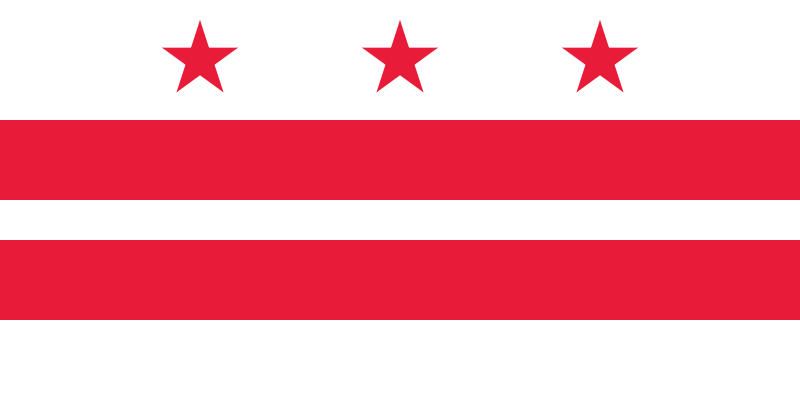 | District of Columbia | $31,629 | 2.25% |
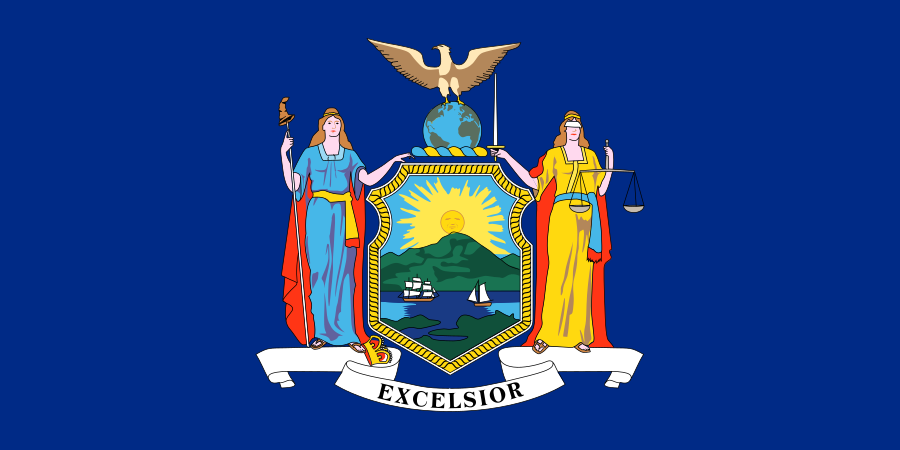 | New York | $30,012 | 4.73% |
 | Vermont | $28,818 | 5.34% |
 | New Jersey | $26,280 | 4.83% |
 | Connecticut | $25,801 | 3.75% |
 | Hawaii | $23,878 | 3.96% |
 | New Hampshire | $22,978 | 3.09% |
 | Massachusetts | $22,947 | 3.4% |
 | Delaware | $22,201 | 3.85% |
 | Rhode Island | $22,110 | 3.74% |
 | Pennsylvania | $21,091 | 3.88% |
 | Wyoming | $20,521 | 3.68% |
 | Alaska | $20,340 | 5% |
 | Illinois | $20,253 | 4.19% |
 | California | $20,233 | 3.21% |
 | Maryland | $20,208 | 3.63% |
 | Maine | $19,962 | 3.65% |
 | Washington | $18,564 | 3% |
 | Michigan | $18,314 | 3.53% |
 | New Mexico | $17,844 | 4.17% |
 | Ohio | $17,257 | 3.54% |
 | Oregon | $17,161 | 3.44% |
 | Virginia | $17,104 | 3.17% |
 | North Dakota | $17,102 | 3.59% |
 | Minnesota | $17,098 | 3.25% |
 | Nebraska | $16,147 | 3.65% |
 | Colorado | $15,897 | 2.73% |
 | Georgia | $15,833 | 3.84% |
 | Wisconsin | $15,790 | 3.25% |
 | South Carolina | $15,060 | 3.36% |
 | Kansas | $14,847 | 3.87% |
 | Louisiana | $14,645 | 3.47% |
 | Kentucky | $14,596 | 3.62% |
 | West Virginia | $14,575 | 3.93% |
 | Iowa | $14,369 | 3.47% |
 | Missouri | $14,241 | 3.11% |
 | Arkansas | $13,873 | 3.49% |
 | Montana | $13,656 | 2.69% |
 | Indiana | $13,622 | 3.05% |
 | Alabama | $13,598 | 3.48% |
 | North Carolina | $12,995 | 2.51% |
 | South Dakota | $12,828 | 2.63% |
 | Florida | $12,689 | 2.16% |
 | Texas | $12,444 | 2.93% |
 | Tennessee | $12,197 | 2.71% |
 | Oklahoma | $12,162 | 3.03% |
 | Mississippi | $12,093 | 3.62% |
 | Arizona | $12,003 | 2.19% |
 | Nevada | $11,673 | 2.32% |
 | Utah | $11,342 | 2.96% |
 | Idaho | $11,056 | 2.55% |
- All spending values shown are per student.
Key Findings
How Much Does the US Spend on Education?
Per pupil spending by state ranges from $11,056 in Idaho to $31,629 in District of Columbia, with a national average of approximately $17,619.
School funding by state varies significantly based on local property tax revenue, state education budgets, and federal allocations, with the federal government providing approximately 8%, states approximately 47%, and local governments approximately 45%.
What State Spends the Most on Education?
District of Columbia spends the most on education at $31,629 per student. The three highest-spending states are District of Columbia ($31,629), New York ($30,012), and Vermont ($28,818).
Higher per pupil spending is often driven by higher teacher salaries, stronger teachers' unions, higher cost of living, and greater reliance on local property tax revenue for school funding.
States That Spend the Least on Education
Idaho spends the least on education at $11,056 per student. The three lowest-spending states are Nevada ($11,673), Utah ($11,342), and Idaho ($11,056).
Lower spending states tend to have lower costs of living, lower teacher salaries, and less local tax revenue available for public school funding.
Does More Spending Mean Better Education?
Per pupil spending does not always correlate directly with educational outcomes. Some states with moderate spending levels achieve strong educational attainment results, while some high-spending states still face achievement gaps.
How money is allocated matters as much as how much is spent. Instructional salaries and benefits typically account for more than half of per pupil spending in most states.
United States Trend Line
Per Pupil Spending Trends
Per pupil spending has generally increased across states over time, driven by rising teacher salaries, inflation, and growing administrative costs. However, growth has been uneven, with some states increasing spending significantly while others have remained relatively flat.
States Ranked by Per Pupil Spending
State Comparison
Per pupil spending varies dramatically across states, with the highest-spending states investing more than three times as much per student as the lowest. These differences reflect variation in teacher compensation, cost of living, local tax bases, and state education funding formulas.